

Take Us Up, Chief
The World of We Were Heroes.
Logan House Publishing Presents.
The World of We Were Heroes.
Take Us Up, Chief
By J.R. Logan.
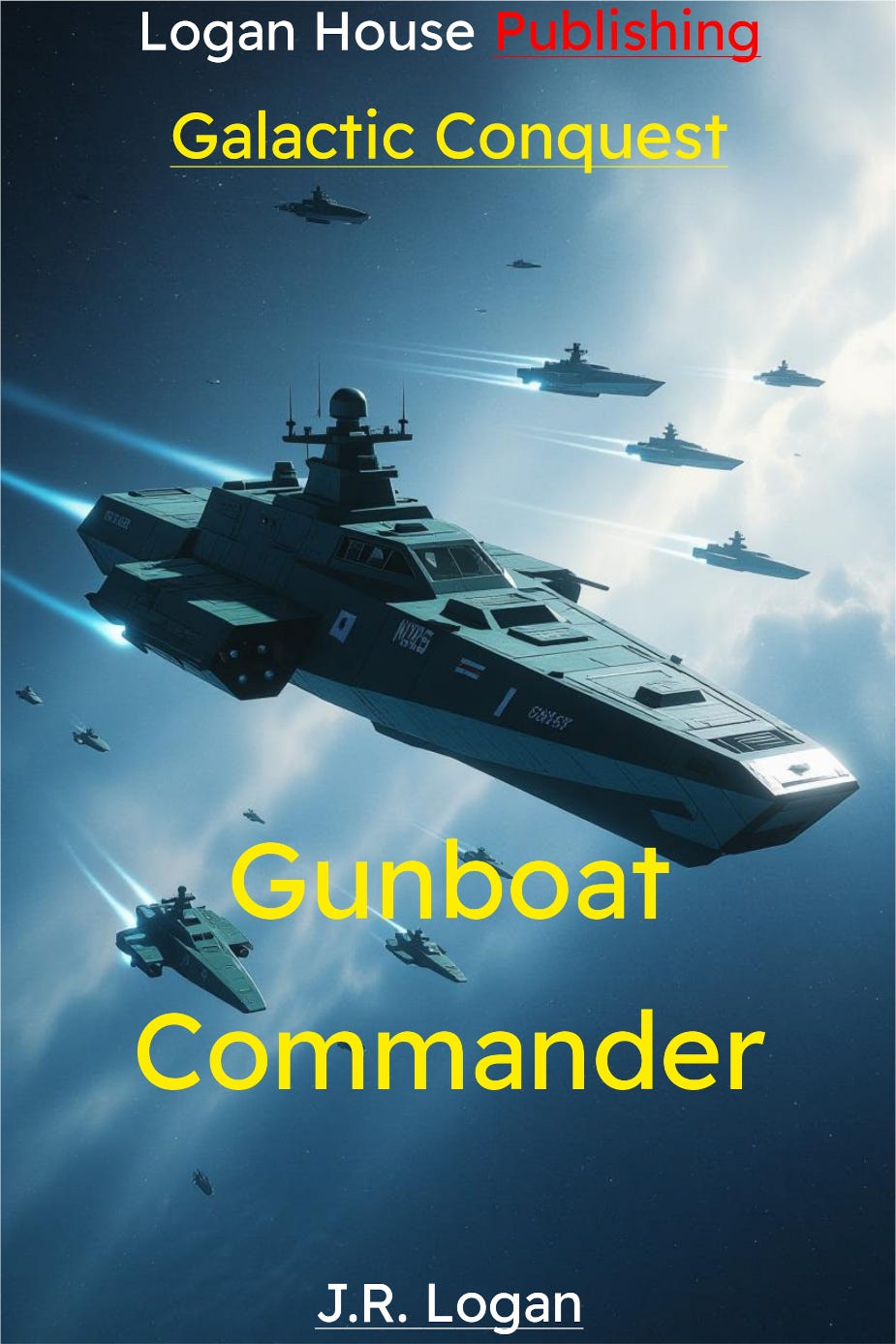
Fradajian Republic, Lower Fradaj, Fradaj, Grand Banks Naval Base.
Deck Log 03.03.445 0800 hours Zulu: Forenoon Watch in the harbor as before. Watch Condition V; Material Condition Yoke. Making preparations to get underway. EOOW reports reactors ready. Change of Watch: BM3 Jeffery Stanton is relieved as OOD by CSBM Hendrick Rodgers.
QM Zhang
Donovan sorted through volumes of star charts. He had spent days planning the crossing to Minneapolis-Saint Paul—a stable binary system with a standard life-bearing yellow star. The companion, Saint Paul, was a red dwarf that orbited far enough for Minneapolis to have stable planets. But the two stars, with their combined gravity, had a massive Oort cloud. Before the Fradajians, comet bombardment fueled by the Oort cloud kept life from developing in the Minneapolis system.
The system history showed the Fradajians had stabilized the dangerous comets. The Oort cloud provided an easy source of water. Terraforming stages one and two had lasted the last two hundred years. The star system engineers still engaged in active comet harvesting. That brought water ships and other light element prospectors from every corner of space. Crews work long hours for years at a time. But long spacers were not the problem in this system. There were smugglers, drug runners, weapons dealers. All looked to get lost and forgotten in an underpopulated star system.
The information that Naval Intelligence provided for Minneapolis-Saint Paul was troubling. Oort clouds are the deep space battleground for the galactic navies. A habitable binary near the Beetalar border, with a large source of natural water, lends it strategic importance. Not a world that will go unnoticed by the Rocar Empire.
New to the galactic stage, the Rocar Empire, five hundred years ago, expanded into the power vacuum created by the Great Beetalar War. The galactic community saw the Rocar as backward, brutal, and savage. Rocar-Fradajian relations were neutral at best, focusing on trade, with Rocar excelling in heavy space industry. They were also good at war. In conflict, the Fradajians would side with the Shrican Republic. A people who had lived in the galactic community for a long time and hated the Rocar. This state of galactic affairs was a difficult one. When the Beetalar made a move on the border, the Rocar Empire would be there to help. And do a land grab if they could. At once, the Rocar were both hero and villain.
It was time to go. Donovan snapped the buckle closed on the nylon gun belt. The keepers snapped down over the outer belt. He strapped the low-ride holster around his knee to hold it in place. He picked up the M-12 heavy electro pistol from the desk. The pistol broke open above the rear sight. The standard laser pistol magazine clicked securely into place inside the upper frame. Donovan closed the breech with a second click. The indicator blinked a full charge. Donovan holstered the pistol and snapped the holster flap closed.
The Riverine Force never knew when heading out of the Grand Banks what mission would arise. A day planned for training could turn into a search and rescue operation, a chase with smugglers, or a battle with pirates. It was standing orders for all commands to have watchstanders on the bridge armed.
“Captain on deck!” Stanton called out, saluting.
Donovan returned the salute and walked over to the navigation station. He sat down in one of the chairs.
Seamen Tim Zhang stood watch as quartermaster with the boat’s navigator, Mr. Thompson. Zhang checked over the local planetary weather while Thompson marked the space weather on the nav’s main active map display. Donovan flipped through both displays on his console. Numbers danced on the screen, showing real-time data on Solar wind and proton density. Solar flare forecasts over the next twelve and twenty-four hours. Donovan adjusted the scale down to the planet’s magnetosphere, normal readings of the Fradaj van Allen belts. There had not been a notice to mariners for thirty hours.
At the helm, Kafuffle relaxed in the lee helm chair. Janish tried to read over his post orders; he sat with a jittery nervousness. Stanton, the Officer of the Deck in Port, sat in the center conning chair. He also looked jittery but more for a desire for activity. When underway, Stanton had an enormous amount of work to do, and the causal sloppiness he displayed in port faded away.
Senior Chief Rodgers at the operations stations leaned over Seaman Oscar Fitzgerald, talking on the radiophone to the Harbormaster. The ops specialists monitored the data feeds from local space traffic control as ships came and went from the surface and near-orbit stations. GPS triangulation beacons tracked the high-speed atmospheric traffic. Rodgers showed the most interest in the LORAN buoys just outside of the Naval Station.
“Granted permission to leave,” Rodgers said.
“Aye, Chief,” Stanton said.
Stanton stood behind the helmsmen and activated the conning station’s secondary display. The underway systems came online, and the holographic windows around the wheelhouse activated, displaying the harbor.
“Petty Officer Stanton, Material Condition X-Ray, please. Secure the weather deck and all external hatches,” Rodgers said.
“Aye, Chief,” Stanton said. He picked up a radiophone and turned on the master channel.
“Material Condition X-Ray! Material Condition X-Ray!” He said.
A few touches of the holographic display and a clang of magnets sealed the doors and hatches around the boat. All doors came back reporting green.
“Sir, the boat is at Material Condition X-Ray, ready for diving and space,” Stanton said.
“Very well, I have the Con,” Rodgers said. “Quartermaster Zhang, Boatswain’s Mate Stanton, take the helm.”
“You two, stand over here and watch,” Stanton said.
“What’s going on?” Janish whispered to Kafuffle.
“Jeff and Tim are licensed pilots; they’re going to get us out of here,” Kafuffle whispered back.
“Harbor control has given final clearance to depart,” Thompson said.
“Release docking clamps,” Rodgers said. A ‘Clang’ ran through the ship.
“Docking clamps released,” Thompson said.
“Lee Helm set speed for the harbor,” Rodgers said.
“Set speed for the harbor, Aye,” Zhang said.
Below in the drive room, Propulsionman Kathy Montgomery acknowledged the bridge request. The computer set the gravity waveguides for the very low power harbor speeds. To avoid an accident, she locked the wave guide’s manual switch in place. Gravity waves flowed down the guides and out onto the hull.
“Helm answers, sir,” Stanton said.
“Reverse two knots,” Rodgers said.
“Reverse two knots, Aye,” Zhang said.
The gunboat moved and edged away from the pier. Rodgers watched the distance from the pier increase incrementally.
“Rudder hard to port,” Rodgers said.
“Rudder hard to port, Aye,” Stanton said. The gunboat turned on its center to look out into the harbor.
“Lee Helm ahead one knot,” Rodgers said.
“Ahead one knot, Aye,” Zhang said.
The boat pulled out into the harbor. Navigation lasers made contact with the lidar receivers.
“500 meters from the cavern wall,” Thompson said.
“Lee Helm full stop,” Rodgers said.
“Full stop, Aye,” Zhang said.
The boat came to an immediate stop; gravity waves countered the inertial momentum. The water around the boat hardly rippled. Rodger waited a moment. “Lee Helm, dive twenty meters below the deck.”
“Dive twenty meters below the deck, aye,” Zhang said.
The keel plate’s local gravity increased, pulling down into the planet. The boat slipped underwater. Thompson counted off the depth as the boat went down.
“Depth 10 meters,” Thompson said.
“Fritzy, do we have the laser guides?” Rodgers said.
“Affirmative, we’re in line with the tube,” Fritz said.
“Lee Helm ahead two knots,” Rodgers said.
“Ahead two Knots Aye,” Zhang said.
The boat moved. Lights ringed an underwater tube leading to the sea. Lasers guided the boat’s path. It crept into the open ocean. The cross-current hit the boat to port. Stanton expected the current and compensated immediately.
“The Boat’s clear of the tube, Depth 300 meters, the current is to the south ten knots,” Thompson said.
“Lee helm ahead fifty knots,” Rodgers said.
“Ahead fifty knots, Aye,” Zhang said. The boat shot out away from the grand bank. Water flowed over the boat’s hull, pushed along by waves of gravity.
“Mr. Thompson, is there anything for us to hit out here?” Rodgers said.
“No. We’re clear, except for the continental shelf behind us,” Thompson said.
“Janish, Kafuffle, you two can go back to your stations. Helm nothing to the east,” Rodgers said.
“Nothing to the east, Aye aye,” Janish said.
“Lee Helm take us up to the surface,” Rodgers said.
“Surfacing aye,” Kafuffle said, pulling back on the yoke. The boat rose and broke out of the surface, leaping a few feet out. Kafuffle brought the boat back down on the water hard.
“Mind your altitude,” Rodgers said, trying not to laugh. “Lee Helm change speed setting to Atmospheric,” Rodgers said.
“Set speed for Atmospheric Aye,” Kafuffle said.
Montgomery watched as the waveguides returned to standard power. She tossed the lock-out tag back into her desk drawer. The boat continued racing over the water.
“You can breathe now, Captain,” Thompson said.
“I watch my career flash before my eyes every time we go into that tunnel. Take us up, Chief,” Donovan said.
“Aye, sir. Helm 20-degree climb. Lee Helm activates the dust shield,” Rodgers said.
“20-degree climb aye,” Janish said.
“Dust shield activated,” Kafuffle said.
A teardrop-shaped energy field surrounded the boat. The shield kept space dust off the ship. In the atmosphere, the shield guided airflow. Long wings of gravity waves reached out hundreds of feet to make an airfoil.
“Chief, let me know when we get to the gunnery course,” Donovan said.
“Yes, Sir,” Rodgers said.
Thank You for Reading.
Copyright 2026. Logan House Publishing.
All rights reserved.